
Introduction
Inside every engine room, few systems are more important than the main engine lubrication system.
Onboard commercial vessels and offshore units, the lubricating oil system is far more than a support circuit. It is one of the main protection barriers preventing severe machinery damage and long-term reliability deterioration. The main engine lubrication system plays a critical role in machinery protection and operational reliability onboard ships and offshore installations, and its function goes well beyond simply circulating oil through the engine.
A properly operating marine engine lubrication system maintains hydrodynamic separation between moving parts, controls internal friction, removes heat from loaded surfaces, transports contaminants away from critical components, and protects metallic surfaces against accelerated wear.
In real onboard operations, major lubrication failures rarely begin with catastrophic alarms or sudden machinery collapse.
Most lubrication-related problems start progressively through slight pressure fluctuations, gradual temperature increase, poor purifier efficiency, slowly contaminated filters, and unnoticed viscosity changes.
That is how many serious engine room incidents begin.
When lubricating oil pressure, cleanliness, viscosity, or temperature leave their safe operating range, the oil film protecting bearings and journals starts losing stability. Once lubrication integrity deteriorates, bearing damage can escalate very quickly.
This is why experienced engine room teams do not monitor the lubrication system only through gauges and alarm panels.
Professional machinery operation requires understanding pressure behavior, contamination development, viscosity stability, thermal balance, and equipment response during operational changes.
Because onboard ships and offshore installations, lubrication management is not only maintenance.
It is machinery protection and operational risk management.
Modern marine engines operate under continuously changing load conditions. During maneuvering, heavy weather, crash astern operations, dynamic positioning, or rapid RPM variation, the lubrication system must remain stable while internal mechanical loads fluctuate constantly.
For this reason, lubrication systems should never be evaluated only through isolated readings.
The real condition of the system is usually revealed through operational trends and system behaviour over time.
In many onboard situations, lubrication instability first becomes noticeable during transient operating conditions rather than during stable operating conditions. Rapid engine load changes, maneuvering operations, standby pump changeovers, or post-maintenance startup conditions often expose weaknesses that may remain unnoticed during stable operation.
This is one reason why experienced marine engineers pay close attention to subtle changes in pressure stability, oil temperature behaviour, purifier performance, and filter condition during operational transitions.
Inside modern engine rooms and offshore power generation systems, machinery reliability depends heavily on early abnormality detection.
Very often, the difference between controlled troubleshooting and serious machinery damage is the ability to recognize small operational deviations before alarm conditions escalate.
“Most lubrication failures do not begin with catastrophic damage. They begin with small operational deviations that were not identified in time.”
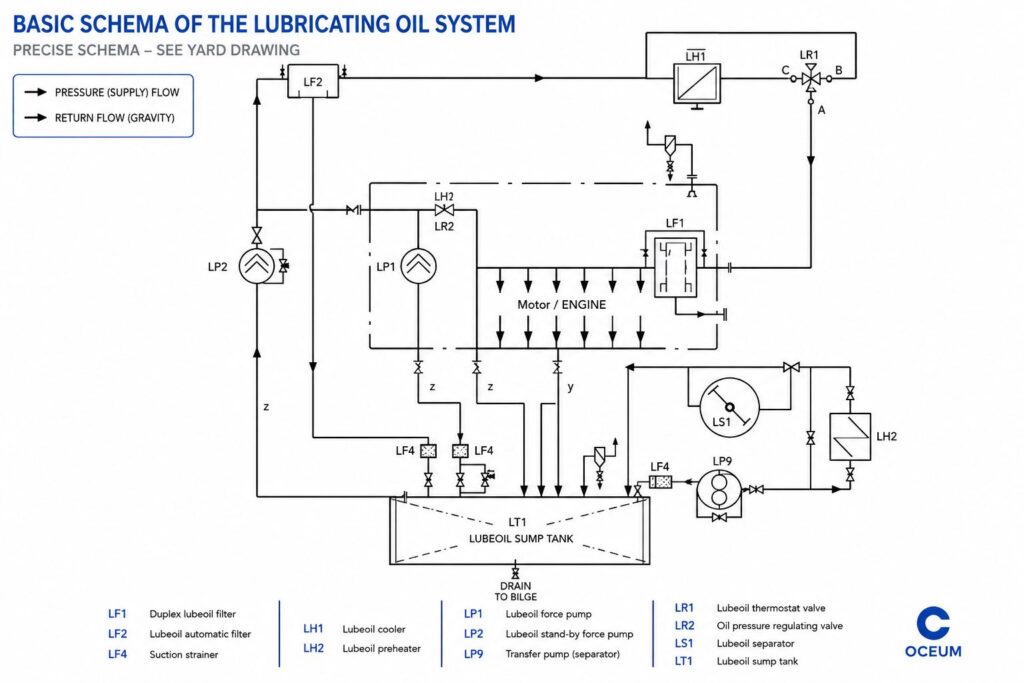
Why the Main Engine Lubrication System Is Critical
The lubrication system is one of the main protection barriers inside any marine diesel engine.
Its stability directly affects bearing protection, temperature control, contamination management, and long-term machinery reliability during all operating conditions.
Hydrodynamic Oil Film Protection
The primary purpose of the main engine lubrication system is maintaining a stable oil film between metallic surfaces operating under heavy mechanical load.
Inside a marine diesel engine, lubricating oil protects main bearings, crankpin bearings, camshaft bearings, crosshead assemblies, and piston cooling spaces depending on engine design.
Without proper lubrication, metal-to-metal contact begins almost immediately.
This may rapidly lead to:
- Bearing overheating
- Scoring
- White metal damage
- Crankshaft surface deterioration
- Severe machinery failure
To maintain bearing protection, the lubrication system must continuously provide stable pressure, correct oil viscosity, proper temperature, and uninterrupted oil circulation under all engine loads.
This becomes especially important during maneuvering operations, rapid RPM variation, heavy weather, startup sequences, and sudden load fluctuations.
A lubrication system that appears stable during normal operation may behave very differently during transient conditions.
That is why lubrication trends during maneuvering and load changes are closely monitored by experienced engine room personnel.
Hydrodynamic lubrication depends on the oil film being capable of supporting mechanical loads while keeping metallic surfaces separated.
As the shaft rotates, the lubricating oil forms a pressure wedge between the journal and bearing surface. This oil wedge supports the mechanical load while preventing direct metallic contact between components.
For this reason, lubrication reliability depends not only on oil viscosity, bearing clearance, oil temperature, flow stability, and contamination condition.
If viscosity decreases excessively due to overheating or contamination, the oil film becomes thinner and weaker. Friction increases, localized heat generation rises, and surface fatigue accelerates.
In practical onboard situations, lubrication degradation may initially develop without obvious alarm activation. Pressure may still remain within acceptable limits while oil film quality is already deteriorating internally.
For this reason marine engineers onboard avoid interpreting lubrication condition through isolated pressure readings only.
Trend stability is often more important than a single indication.
Small but progressive fluctuations in:
- Oil pressure
- Bearing temperature
- Purifier discharge condition
- Filter differential pressure
Internal Cooling Function
Lubricating oil not only reduces friction between moving parts, but also plays an essential role in internal engine cooling and thermal stability.
Large amounts of heat generated by combustion forces, friction, rotating components, and dynamic mechanical loading are continuously removed through oil circulation.
This cooling effect becomes particularly important in heavily loaded bearings, piston cooling arrangements, and medium-speed engines operating under variable load conditions.
Inside marine diesel engines, some components operate under extremely high thermal and mechanical stress. Without proper heat removal through lubricating oil circulation, localized temperatures may rise rapidly, reducing oil film stability and accelerating internal wear.
When lubricating oil temperature rises excessively, viscosity decreases and the oil film protecting the bearings becomes weaker.
This creates a dangerous cycle where higher temperature reduces oil film thickness, increases friction, and generates even more heat. If not identified and corrected early, the condition may escalate rapidly into severe bearing damage and machinery failure.
Inside real engine room operations, engineers understand that pressure alone does not guarantee safe lubrication.
Oil condition, contamination control, viscosity stability, and thermal balance are equally important for maintaining machinery reliability.
This becomes especially important during transient operating conditions such as:
- Maneuvering
- Rapid load increase
- Blackout recovery
- Crash astern operation
- Startup after maintenance
During these periods, engine load and thermal conditions may change faster than the lubrication system can fully stabilize.
As a result, temporary temperature fluctuations and viscosity instability may appear before the system reaches steady operating condition.
Experienced engine room personnel therefore monitor not only final operating values, but also how quickly the lubrication system stabilizes after load variation.
In practical onboard situations, gradual temperature increase is often one of the earliest indications that lubrication performance is beginning to deteriorate.
The problem may initially appear as unstable temperature trends, increasing bearing temperature, reduced cooler efficiency, abnormal purifier condition, or fluctuating oil viscosity behaviour before evolving into a more serious machinery reliability issue.
This is one reason why thermal trend interpretation plays a major role in professional machinery operation onboard ships and offshore installations.
Cleaning and Contaminant Removal
Lubricating oil continuously carries contamination throughout the system.
Typical contaminants include metallic wear particles, combustion residues, oxidation products, sludge, and external contaminants entering the system during operation or maintenance activities. These contaminants are removed through filters, purifiers, and settling areas inside the drain tank.
If filtration efficiency decreases, the oil gradually stops behaving as a lubricant and begins acting as an abrasive fluid. Even microscopic metallic particles may accelerate bearing wear, surface fatigue, journal scoring, and filter blockage.
Inside the engine room, contamination control is not simply a maintenance routine. It is a fundamental part of machinery reliability management. Engine room teams continuously monitor purifier efficiency, filter differential pressure, oil appearance, sludge accumulation trends, and drain tank condition because contamination rarely develops suddenly. In most cases, lubrication deterioration progresses gradually long before major alarms activate.
During daily engine room operations, contamination problems frequently develop after maintenance intervention, cooler leakage, poor purifier adjustment, extended operation under abnormal combustion conditions, or unstable fuel quality.
For this reason, experienced marine engineers pay close attention not only to oil analysis reports, but also to the overall operational behaviour of the lubrication system. Abnormal purifier discharge condition, unstable differential pressure trends, excessive sludge formation, or unusual drain tank appearance may all indicate developing contamination problems inside the system.
Inside modern engine rooms and offshore machinery spaces, contamination control is closely connected to machinery reliability, bearing protection, and long-term equipment condition. Poor contamination management may gradually reduce lubrication efficiency without creating immediate alarm conditions. During normal engine room operation, lubrication deterioration may remain unnoticed until abnormal wear, unstable temperatures, or bearing damage begin affecting machinery reliability elsewhere in the system.
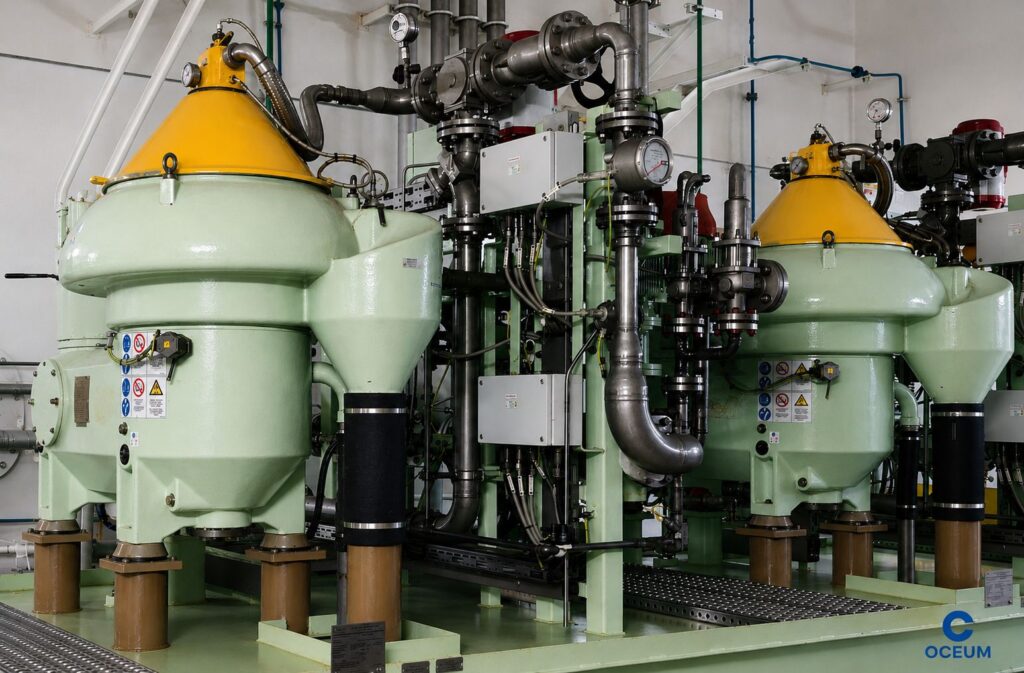
Water Contamination Risks
Water contamination remains one of the most dangerous conditions inside any marine lubricating oil system.
Common sources include lubricating oil cooler leakage, condensation, purifier malfunction, and contamination introduced during maintenance activities.
Even relatively small amounts of water may weaken oil film strength, accelerate internal corrosion, damage white metal surfaces, and destabilize viscosity behaviour inside the system.
In severe cases, emulsification may occur, significantly reducing lubrication effectiveness and increasing the risk of bearing damage.
Typical onboard indications include:
- Milky oil appearance
- Unstable purifier operation
- Increasing water content during oil analysis
- Abnormal drain tank condition
In practical engine room operations, water contamination does not always appear immediately through alarms or shutdown conditions. Very often, the first signs are subtle.
Slight oil discoloration, unstable purifier discharge, abnormal sludge accumulation, or minor temperature fluctuation may all indicate developing contamination inside the system long before serious machinery damage occurs.
This is one reason why onboard engineering teams rely heavily on routine observation and trend monitoring rather than depending exclusively on alarm systems.
Inside offshore units and commercial vessels, early detection of water contamination is particularly important because lubrication deterioration may progressively affect multiple machinery components simultaneously.
If contamination remains uncontrolled for extended periods, the combined effects of corrosion, reduced film strength, unstable viscosity, and accelerated wear may significantly reduce machinery reliability.
That is why professional lubrication management depends heavily on operational awareness, contamination control, and early abnormality recognition inside the engine room.
Metallic Wear Particles and Bearing Damage
One of the most serious contamination sources inside lubrication systems is metallic wear debris.
These particles may originate from bearing wear, gear contact surfaces, pump internal deterioration, piston ring abrasion, or crankshaft surface damage.
Although many particles are microscopic, continuous circulation may progressively damage highly loaded surfaces throughout the engine.
Repeated metallic contamination passing through bearings increases the risk of localized overheating, scoring, lubrication instability, and surface fatigue.
In practical onboard operations, abnormal metallic particle generation rarely appears suddenly without previous indications. Very often, developing internal wear first becomes noticeable through:
- Unstable temperature trends
- Abnormal filter differential pressure
- Increasing purifier sludge accumulation
- Gradual changes in oil analysis reports
For this reason, lubricating oil analysis is extremely important onboard modern ships and offshore installations.
Abnormal increases in iron, copper, aluminum, chromium, or white metal residues may indicate developing internal wear long before catastrophic machinery failure occurs. Trend interpretation is particularly important.
A single isolated laboratory result does not always indicate a severe problem. However, progressive increases in metallic wear particles over time frequently indicate developing deterioration inside bearings, rotating components, or lubricated surfaces.
Inside modern engine rooms, oil analysis is not treated only as a maintenance requirement. It is part of predictive machinery reliability management.
When combined with onboard operational observation, temperature trends, purifier condition, and machinery behaviour, lubricating oil analysis becomes an important tool for early abnormality detection and machinery protection.
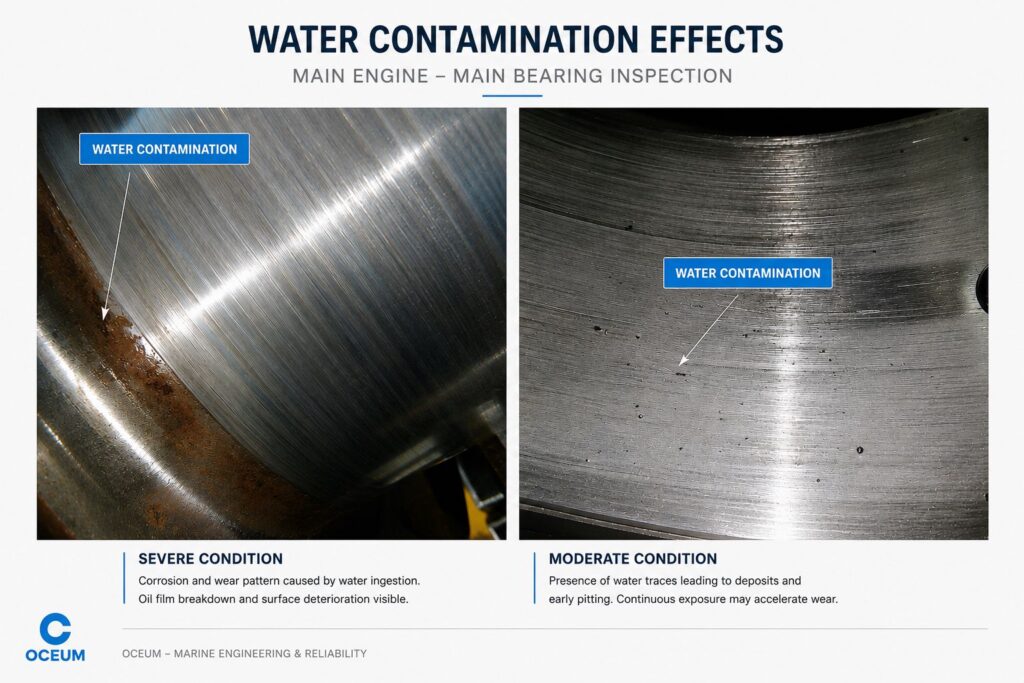
Main Components of the Lubrication System
The lubrication system is composed of several interconnected components responsible for oil circulation, contamination control, temperature stability, and machinery protection.
Reliable operation depends on the combined performance of pumps, filters, coolers, purifiers, and monitoring arrangements working together under varying engine loads.
Drain Tank / Sump Tank
The drain tank acts as the main oil reservoir, thermal stabilization area, contamination observation point, and oil return collection system.
Inside the engine room, experienced engineers can often identify early lubrication problems simply by observing drain tank condition during routine rounds and watchkeeping activities.
Abnormal indications may include foam formation, excessive sludge accumulation, fuel smell, water traces, or excessive oil darkening.
Foaming may indicate air ingress, suction instability, or excessive turbulence inside the return system, while fuel dilution may indicate injector leakage, combustion problems, or abnormal cylinder condition.
During normal onboard routines, the drain tank frequently reflects the overall condition of the lubrication system long before major alarms appear.
A clean and stable tank condition normally indicates proper purifier performance and acceptable contamination control. On the other hand, abnormal appearance, unstable oil condition, or excessive sludge accumulation often indicate developing operational problems elsewhere in the machinery system.
For this reason, routine drain tank observation remains an important part of professional engine room operation and machinery reliability monitoring.
Lubricating Oil Pumps
Most marine engines use screw pumps or gear pumps for lubricating oil circulation.
Typical systems include one running pump and one standby pump with automatic changeover capability during low-pressure conditions.
Common operational problems include cavitation, suction air ingress, internal wear, relief valve malfunction, and poor standby pump readiness.
One common mistake onboard is assuming the standby pump is operational simply because it remains in standby mode.
A standby pump that is never tested under real operating conditions may fail exactly when required during an emergency pressure drop.
For this reason, experienced engine room teams periodically test standby pumps under operational conditions rather than relying only on automatic standby indication.
Inside practical engine room operations, unstable suction condition, abnormal vibration, fluctuating pressure, or unusual pump noise may indicate developing lubrication instability long before alarm activation occurs.
Professional machinery management therefore includes standby pump testing, vibration awareness, pressure stability verification, suction condition monitoring, and abnormal noise investigation because pump reliability directly affects machinery protection.
Reliable lubricating oil circulation is one of the main protection barriers preventing bearing damage and maintaining stable engine operation during varying load conditions.
Filters
Modern lubrication systems commonly use duplex filters, automatic backflush filters, and fine filtration arrangements depending on engine design and operational philosophy.
Differential pressure monitoring across filters is extremely important because filter condition directly affects oil flow stability and contamination control inside the system.
Professional machinery operation means evaluating contamination behaviour, filter loading condition, and pressure trend progression before alarm limits are reached.
If filter bypass opens, unfiltered oil may enter the engine, significantly increasing wear risk.
For this reason, filter bypass should never be considered a normal operating condition during routine engine operation.
Repeated high differential pressure often indicates deteriorating oil condition, excessive sludge accumulation, poor purifier efficiency, or abnormal contamination development rather than simply “dirty filters.”
Inside practical engine room operations, sudden differential pressure fluctuation may also indicate unstable contamination behaviour, purifier carryover, or sludge release inside the lubrication circuit.
This explains why engine room personnel monitor filter condition together with purifier performance, drain tank appearance, and oil analysis trends rather than evaluating filters as isolated components.
Reliable filtration is essential for maintaining bearing protection, stable oil condition, and long-term machinery reliability onboard ships and offshore installations.
Lubricating Oil Coolers
The lubricating oil cooler maintains oil temperature within the manufacturer’s recommended operating range.
Temperature directly affects viscosity behaviour and overall lubrication stability inside the engine.
If oil becomes too cold, viscosity increases, circulation resistance rises, and pump loading increases. If oil becomes too hot, viscosity decreases, the oil film becomes thinner, and bearing protection weakens.
Typical cooler-related problems onboard include:
- Seawater fouling
- Insufficient cooling water flow
- Thermostatic valve malfunction
- Incorrect valve alignment
Inside marine and offshore operations, trend analysis is often more valuable than isolated readings.
A gradual temperature increase may indicate deteriorating cooling efficiency long before alarms activate.
For this reason, experienced engine room personnel closely monitor lubricating oil temperature behaviour during maneuvering, load variation, and prolonged high-load operation, where thermal instability may become more noticeable.
Stable temperature control is essential for maintaining viscosity stability, reliable oil circulation, and long-term bearing protection.
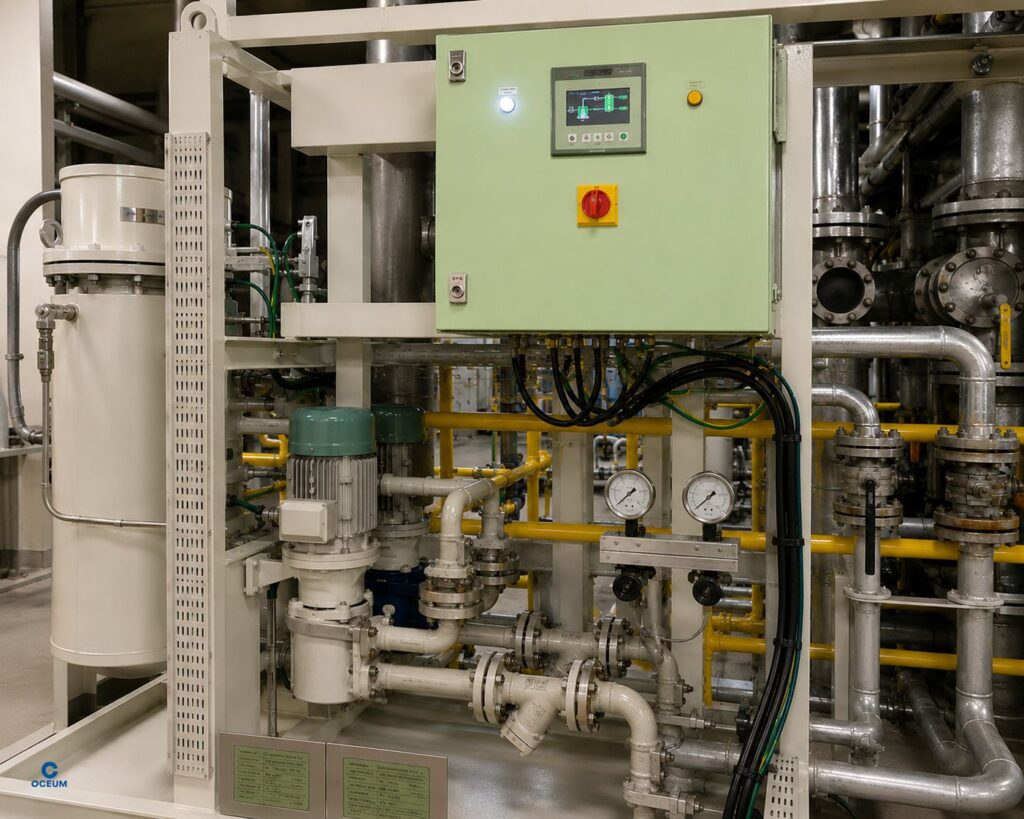
Lubricating Oil Analysis and Trend Monitoring
Modern marine maintenance increasingly depends on lubricating oil analysis as part of predictive reliability management.
Oil analysis helps identify developing machinery problems long before visible damage or alarm activation occurs. Modern marine condition monitoring programs frequently rely on laboratory oil analysis and wear particle trend evaluation to support predictive maintenance and machinery reliability management.
Typical monitored parameters include viscosity, water content, Total Base Number (TBN), oxidation level, insolubles, and metallic wear particles.
Trend analysis of iron, copper, aluminum, chromium, and white metal residues may indicate early deterioration of bearings, liners, gears, or rotating components.
Onboard ships and offshore units, oil analysis should never be treated as a paperwork requirement only.
Its real value comes from trend interpretation and early abnormality detection.
In practical engine room operations, isolated laboratory results rarely provide a complete understanding of machinery condition.
Reliable interpretation normally depends on comparing operational trends over time together with:
- Machinery behaviour
- Temperature stability
- Purifier performance
- Contamination condition
For this reason, professional machinery management combines laboratory analysis, onboard observation, operational trends, and equipment behaviour to support safer and more reliable engine room operation.
When properly interpreted, lubricating oil analysis becomes an important tool for predictive maintenance, machinery protection, and long-term reliability management onboard ships and offshore installations.
Temperature, Pressure and Viscosity Interaction
One of the most important concepts in marine lubrication is understanding the direct relationship between pressure, temperature, and viscosity. These parameters continuously interact during engine operation.
As temperature increases, viscosity decreases. As viscosity decreases, oil film thickness reduces. As oil film thickness reduces, bearing load capacity becomes weaker.
For this reason, pressure alone does not always indicate safe lubrication conditions.
A system may still display “normal pressure” while lubrication quality is already deteriorating due to overheating, contamination, fuel dilution, oxidation, or viscosity breakdown.
Inside practical engine room operations, lubrication condition is evaluated through overall system behaviour rather than isolated readings alone.
Technical personal analyze trends, thermal balance, contamination behaviour, oil condition, and circulation stability together when assessing lubrication performance onboard.
A reliable lubrication system therefore depends not only on maintaining pressure within limits, but also on stable viscosity, continuous circulation quality, contamination control, and temperature stability under all operating conditions.
Small operational deviations may progressively affect lubrication quality long before serious alarm conditions appear.
As a result, operational awareness and trend interpretation remain essential elements of professional machinery management onboard ships and offshore installations.
Lubrication System Reliability During Maneuvering and Load Changes
Lubrication system stability becomes particularly important during maneuvering operations, startup sequences, rapid load changes, blackout recovery, heavy weather, and crash astern conditions. During these transient operating periods, internal mechanical loading fluctuates rapidly, making pressure instability and temperature variation more pronounced – especially when coolers are partially fouled, filters are contaminated, pumps are worn, or oil condition has deteriorated.
This is why experienced engine room teams closely monitor lubrication behaviour during port arrival, departure operations, standby-to-running transitions, blackout recovery, and maneuvering conditions.
In practical onboard operations, lubrication systems that appear stable during steady sea passage may respond very differently during rapid engine load variation or sudden operational transitions. For this reason, transient operating conditions are often considered one of the most critical periods for evaluating lubrication system stability and overall machinery reliability onboard.
Common Operational Problems
Even well-maintained lubrication systems may develop operational instability under demanding engine room conditions.
Pressure fluctuation, temperature increase, contamination buildup, and purifier inefficiency are among the most common problems affecting lubrication reliability onboard ships and offshore installations.
Low Lubricating Oil Pressure
Low lubricating oil pressure may be associated with pump wear, clogged filters, low drain tank level, relief valve malfunction, excessive bearing clearance, or suction air ingress. Inside practical engine room operations, low lubricating oil pressure should always be treated seriously because even temporary lubrication instability may accelerate bearing damage and internal surface wear.
Professional response normally includes verifying local pressure indication, confirming standby pump operation, checking filter differential pressure, inspecting suction conditions, evaluating temperature behaviour, and reducing engine load if necessary.
In many onboard situations, early pressure instability may first appear as fluctuating pressure trends rather than immediate low-pressure alarms. This is one reason why experienced marine engineers closely monitor pressure behaviour during maneuvering, load variation, and standby pump changeover conditions.
Rapid pressure loss should never be underestimated. Inside modern engine rooms and offshore machinery spaces, stable lubricating oil pressure remains one of the most important protection barriers preventing severe bearing damage and lubrication failure.
High Lubricating Oil Temperature
High lubricating oil temperature may be associated with cooler fouling, insufficient cooling water flow, thermostatic valve malfunction, excessive internal friction, or poor oil circulation. Inside professional engine room operations, gradual temperature increase is treated seriously long before reaching shutdown limits.
In many onboard situations, abnormal temperature behaviour develops progressively rather than suddenly. Small but continuous temperature increases may indicate deteriorating cooler efficiency, unstable circulation condition, contamination buildup, or increasing internal friction inside the machinery system.
For this reason, watchkeeping engineers monitor temperature trends carefully during prolonged high-load operation, maneuvering conditions, and rapid engine load variation where thermal instability may become more noticeable.
Stable lubricating oil temperature remains essential for maintaining viscosity stability, reliable oil film protection, and long-term machinery reliability.
Poor Purifier Performance
Improper purifier adjustment may lead to sludge carryover, contamination accumulation, unstable oil condition, and increased long-term machinery wear. Common operational mistakes include incorrect gravity disc selection, unstable feed temperature, excessive throughput, and poor sludge discharge intervals.
Inside practical engine room operations, purifier instability frequently develops progressively and may initially remain unnoticed if sludge accumulation and oil condition are not properly monitored.
Professional purifier management therefore requires understanding oil properties, contamination behaviour, feed temperature stability, and separation efficiency rather than simply keeping the purifier running.
Reliable purifier operation plays an important role in contamination control, bearing protection, and long-term lubrication system reliability onboard ships and offshore installations.
Alarm and Protection Philosophy
Inside modern engine rooms, lubrication alarms should never be treated as isolated events.
Repeated alarms normally indicate progressive degradation, unresolved instability, incomplete troubleshooting, or poor operational discipline.
Professional machinery management focuses on early intervention, trend interpretation, root cause identification, and preventing escalation rather than simply resetting alarms.
Many serious machinery incidents begin with repetitive minor alarms that gradually become normalized during daily operation.
That normalization process is dangerous.
In real onboard operations, lubrication failures frequently escalate due to delayed response, inadequate troubleshooting, poor watchkeeping, incorrect valve alignment, unnoticed trend deterioration, or bypasses left open after maintenance activities.
Reliable machinery operation depends not only on equipment condition, but also on engineering awareness and operational discipline onboard.
Inside professional engine room culture, alarms are interpreted as indicators of changing machinery behaviour rather than isolated sensor events.
Consequently, operational awareness, trend interpretation, and early abnormality recognition remain fundamental elements of professional machinery management onboard ships and offshore installations.
Operational Awareness in the Engine Room
In real onboard operations, lubrication systems are not monitored only through gauges and alarm panels.
Engine room personnel continuously evaluate sound, vibration, pressure stability, purifier behaviour, oil appearance, filter condition, pump response, and overall machinery performance.
Operational awareness is developed through routine observation, system familiarity, engineering judgment, and trend interpretation.
That awareness is often what prevents small abnormalities from becoming major machinery failures.
The most reliable engine room teams are usually not the ones reacting fastest to alarms.
They are the ones identifying abnormal system behaviour before alarms occur.
Inside modern ships and offshore installations, machinery reliability depends heavily on maintaining strong operational awareness during daily engine room operation, maneuvering conditions, maintenance activities, and machinery troubleshooting.
Related Reading
For additional onboard best practices regarding contamination control and separator operation, see:
Oily Water Separator (OWS) Operation and Maintenance Best Practices
Conclusion
The main engine lubrication system remains one of the most important protection and reliability barriers onboard any vessel or offshore installation. Its long-term performance depends not only on equipment condition, but also on operational discipline, contamination control, maintenance quality, trend monitoring, and engineering awareness developed through daily engine room operations.
Successful lubrication management is not simply maintenance work — it is operational risk management inside the machinery space. Professional marine engineers understand that lubrication reliability depends on maintaining system stability, contamination control, thermal balance, operational awareness, and early trend interpretation before abnormal conditions escalate into machinery damage.
Inside practical onboard operations, machinery failures rarely begin with catastrophic events. Most of them begin with small operational deviations that were not correctly identified in time. This is why experienced engine room teams continuously monitor lubrication behaviour, pressure stability, temperature trends, purifier performance, and oil condition as part of safe and reliable machinery operation.
In modern marine and offshore operations, stable lubrication integrity remains essential for protecting bearings, reducing internal wear, preserving machinery efficiency, and maintaining long-term operational reliability.