
Real Operation, Control Philosophy, Typical Failures and the Transition Toward High-Pressure Steam Systems (FPSO Context)
Introduction
On board commercial vessels, the marine auxiliary boiler system is often underestimated — until it fails.
In product tankers, crude carriers and even bulk carriers, the boiler is not just a supporting unit. It is a core thermal system that directly affects cargo operations, fuel handling and overall vessel functionality.
Cargo heating, fuel treatment, domestic services, tank cleaning and sludge handling all depend on stable and reliable steam generation within the vessel’s marine steam system.
From an operational point of view, boiler problems rarely start as major failures. They usually begin with small deviations that are often considered acceptable during routine operation:
- Conductivity slowly increasing
- Blowdown not properly managed
- Combustion slightly out of adjustment
- Soot accumulating inside the economizer
- Water treatment recorded but not effectively controlled
These are the types of deviations that do not trigger immediate alarms, but gradually degrade system performance.
At first, they may seem minor. However, when ignored, they can develop into real operational problems such as:
- Tube overheating
- Scale formation
- Steam contamination (carryover)
- Corrosion damage
- Combustion instability
In practice, most boiler-related issues onboard are not caused by sudden failure, but by progressive loss of control over these parameters.
Understanding how a marine boiler system behaves under real operating conditions — rather than only in theoretical diagrams — is essential for maintaining safe and efficient operation.
It also provides the foundation required to understand more advanced steam systems used in offshore units such as FPSOs.
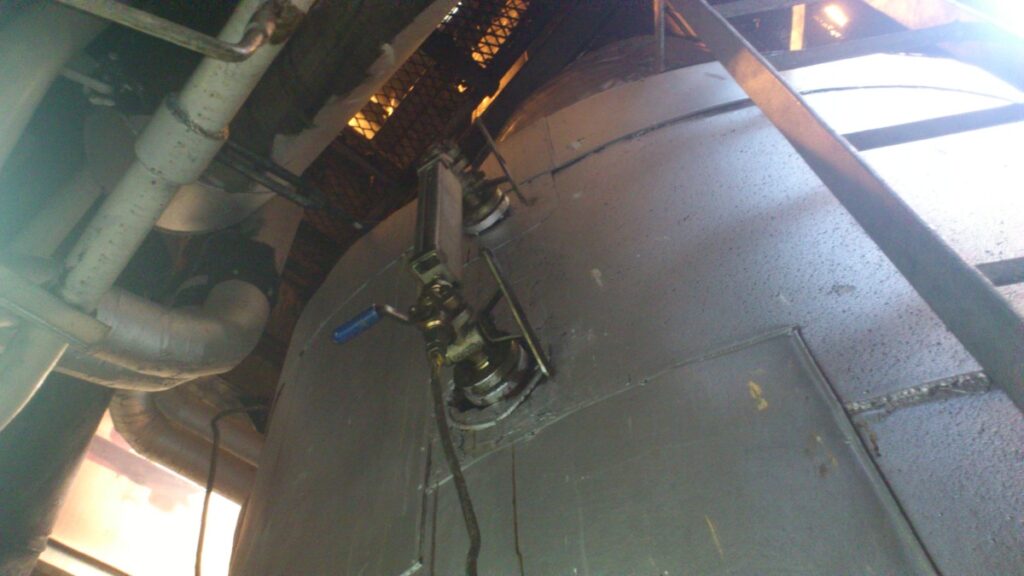
Why Steam Is Critical on Commercial Ships
Before discussing boiler types, it is essential to understand where steam is actually used onboard and why it plays a critical operational role.
Steam is not only a utility service. In many vessels, it is directly linked to the vessel’s ability to operate efficiently, particularly in cargo handling and fuel management.
Typical Steam Consumers on Tankers
Steam onboard tankers is used across multiple systems, all of them critical for safe and efficient operation:
- Cargo tank heating coils
- Cargo line tracing
- Fuel oil settling and service tank heating
- Fuel viscosity control before injection
- Sludge and waste oil heating
- Domestic services (galley, laundry, accommodation)
- Tank cleaning systems
- Soot blowing (when installed)
In tankers, steam production is directly linked to cargo operations and fuel handling.
A loss of steam does not only affect comfort or auxiliary systems — it directly impacts cargo handling capability. No steam means no cargo operation.
Steam Use on Bulk Carriers
Although the steam demand is lower compared to tankers, it remains essential for several onboard functions:
- Fuel heating
- Domestic services
- Auxiliary heating systems
- Heat recovery through economizers during navigation
On bulk carriers, steam is often considered a secondary system. However, its absence quickly affects engine room operations, particularly fuel handling and system stability.
Even in these vessels, loss of steam reduces operational flexibility and may lead to operational delays if not properly managed.
Main Types of Marine Boilers
Different vessels use different boiler configurations depending on operational requirements, trading patterns and energy demand.
From an engine room perspective, understanding not only the type of boiler installed, but also how it behaves under different operating conditions, is essential for maintaining stable steam supply.
In most commercial vessels, the marine auxiliary boiler system is designed around three main configurations:
- Auxiliary oil-fired boilers
- Composite boilers
- Exhaust gas boilers (economizers)
Each type has its own operational characteristics, advantages and limitations, which directly influence how engineers manage steam production onboard and the overall performance of the marine auxiliary boiler system.
Auxiliary Oil-Fired Boiler
This is the conventional burner-operated boiler and represents the most direct and controllable method of steam generation onboard.
It operates independently from the main engine and relies entirely on fuel combustion to generate heat.
Typical operation:
- In port, when the main engine is stopped
- During maneuvering, when engine load is unstable
- When exhaust gas heat recovery is insufficient
- During cargo operations requiring constant steam demand
In tankers, this boiler is often the primary source of steam during loading, discharge, and tank cleaning operations.
Main characteristics:
- Fully automatic burner operation
- Steam pressure-controlled firing system
- Integrated water level control
- Capability to operate on MGO or HFO (depending on design)
From a practical standpoint, the stability of this boiler depends heavily on combustion quality and proper fuel preparation.
Operational advantages:
- Independent steam production regardless of engine load
- Reliable response to sudden steam demand
- Full control over pressure and output
Operational limitations:
- Continuous fuel consumption
- Dependence on proper fuel temperature and viscosity
- Requires regular burner maintenance and adjustment
In real operations, poor combustion is one of the most common sources of inefficiency and instability in marine auxiliary boilers.
Even small issues such as dirty nozzles or incorrect air-fuel ratio can lead to:
- Soot formation
- Flame instability
- Reduced efficiency
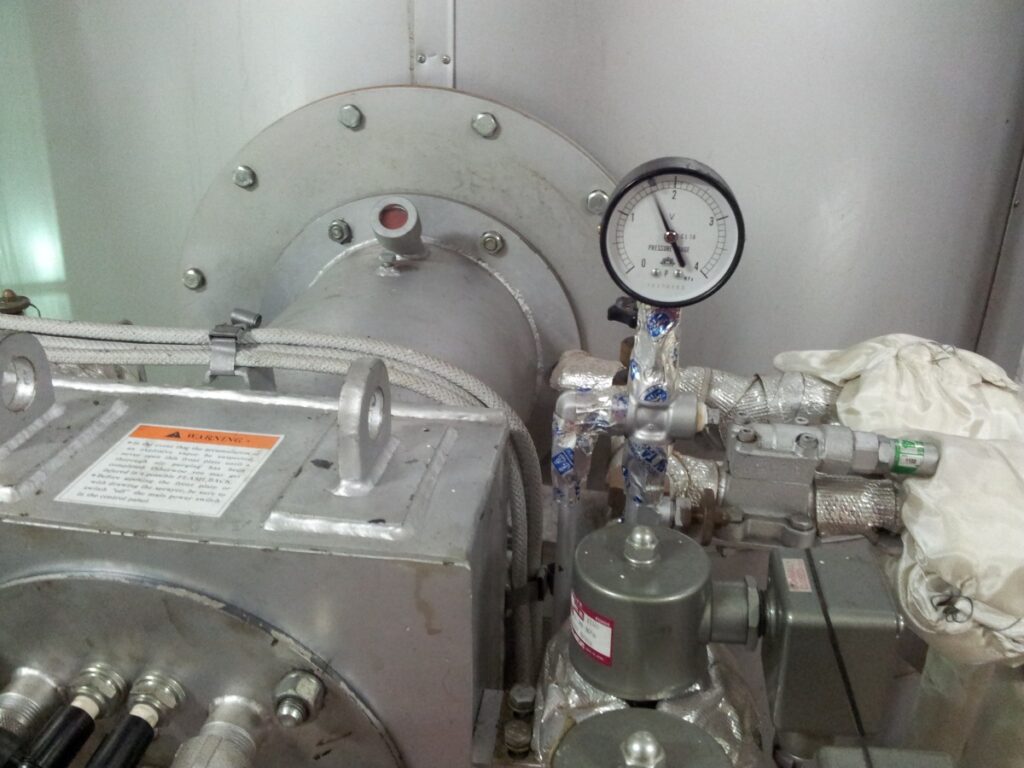
Composite Boiler
A composite boiler integrates two heat sources into a single unit:
- An oil-fired furnace
- An exhaust gas section connected to the main engine
This configuration allows the system to operate in different modes depending on vessel condition.
Operational concept
During navigation:
- Exhaust gases from the main engine pass through the economizer section
- Heat is recovered to produce steam without additional fuel consumption
In port or low engine load:
- The oil-fired burner is activated to maintain steam production
Operational advantages:
- Significant reduction in fuel consumption
- Improved overall energy efficiency
- Effective utilization of waste heat
Operational limitations:
- Steam production depends on main engine load
- Reduced efficiency at low engine loads
- Requires careful control during changeover between modes
Practical onboard considerations
One of the most common operational challenges with composite boilers is managing the transition between:
- Exhaust gas mode
- Oil-fired mode
If not properly controlled, this transition may lead to:
- Steam pressure fluctuations
- Burner instability
- Temporary loss of steam control
Additionally, the exhaust gas section is highly exposed to soot accumulation, especially when:
- Combustion is poor
- The main engine operates at low load for extended periods
This leads to reduced heat transfer efficiency and requires periodic cleaning.
Exhaust Gas Boiler (Economizer)
The exhaust gas boiler, commonly referred to as an economizer, is installed in the main engine exhaust system and uses waste heat to generate steam.
Operational concept
Hot exhaust gases pass through heat exchange surfaces, transferring energy to water and producing steam without additional fuel consumption.
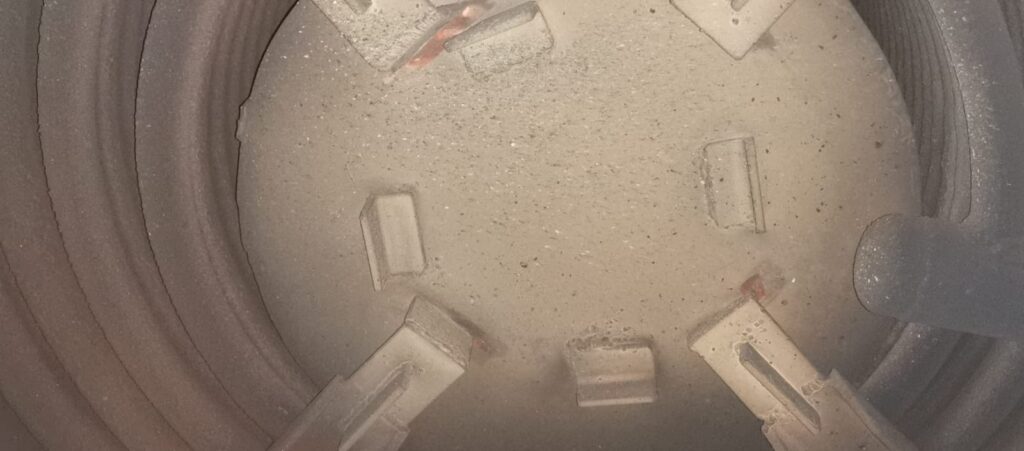
This system is highly efficient when the main engine operates at a stable load.
Operational benefits:
- No additional fuel consumption
- Continuous steam generation during navigation
- Reduced load on marine boilers
Operational limitations:
- Steam production is directly dependent on engine load
- Limited output at low engine loads
- Performance affected by fouling
Practical onboard considerations
The main operational concern in economizers is the condition of heat transfer surfaces.
Over time, soot and unburned particles accumulate, reducing heat transfer efficiency.
If not properly monitored, this can lead to:
- Reduced steam generation
- Increased exhaust gas temperature
- Risk of soot fire under certain conditions
For this reason, engineers must monitor:
- Exhaust gas temperature trends
- Steam production behavior
- Overall system performance over time
Fire-Tube vs Water-Tube Boilers (Operational and Practical Differences)
Understanding the difference between fire-tube and water-tube boilers is essential for interpreting the behavior of marine auxiliary boiler systems under real operating conditions.
From an engine room perspective, these differences directly affect:
- Stability of operation
- Response to load changes
- Sensitivity to water level
- Risk profile during abnormal conditions
Fire-Tube Boilers
In fire-tube boilers, hot combustion gases pass through tubes that are surrounded by water.
Operational characteristics:
- Large water volume
- High thermal inertia
- Slower response to load variations
- More stable pressure behavior
From an operational point of view, fire-tube boilers are generally more tolerant to operational deviations
Main operational risks:
- Carryover due to poor water condition
- Scale formation inside tubes
- Reduced heat transfer over time
Water-Tube Boilers
In water-tube boilers, water flows inside the tubes while hot combustion gases pass around them.
Operational characteristics:
- Low water volume
- Fast thermal response
- Higher operating pressure capability
These boilers require more precise control and are more sensitive to operational deviations, demanding stricter monitoring.
Main operational risks:
- Tube overheating due to low water level
- Rapid temperature rise under unstable conditions
- Increased sensitivity to poor water treatment
Practical Comparison and Onboard Implications
| Parameter | Fire-Tube Boiler | Water-Tube Boiler |
|---|---|---|
| Water volume | High | Low |
| Response time | Slow | Fast |
| Stability | High | Moderate |
| Sensitivity | Lower | High |
| Pressure range | Lower | Higher |
| Risk profile | Gradual issues | Rapid escalation |
Key operational insights:
- Fire-tube boilers provide stability and operational tolerance
- Water-tube boilers provide efficiency and fast response
The more efficient the system, the less tolerant it becomes to operational deviations.
Practical Comparison: System Behavior and Integration Onboard
Marine boilers are not operated as isolated units. Instead, they function as part of an integrated steam system that must continuously adapt to changing onboard conditions.
From an engine room perspective, steam generation is a dynamic process influenced by multiple operational factors:
- Steam demand from cargo, fuel and domestic systems
- Main engine load and exhaust gas availability
- Fuel condition and combustion quality
- Vessel operating mode (port, maneuvering or navigation)
In practice, maintaining stable steam supply requires proper coordination between auxiliary boilers, composite systems and economizers.
Failure to understand this interaction can lead to instability, inefficient operation and increased risk of system disturbances.
System Behavior Under Different Conditions
Understanding how the boiler system behaves under different operating conditions is essential for maintaining stable steam supply onboard.
In port:
- Marine auxiliary boiler provides the full steam demand
- System operates in a stable and controlled condition
During maneuvering:
- Steam demand may fluctuate
- Main engine load is unstable
- Boiler control system must respond quickly to variations
At sea (normal navigation):
- Exhaust gas economizer contributes to steam generation
- Auxiliary boiler operates in standby or partial load
- Steam production depends on engine load stability
From an operational perspective, transitions between these conditions are critical moments where loss of control may occur if not properly managed.
Integration Between Boiler Systems
Steam production onboard is not handled by a single unit, but shared between multiple heat sources:
- Auxiliary boiler
- Composite boiler
- Exhaust gas boiler (economizer)
These systems must operate in coordination to ensure continuous and stable steam supply under all operating conditions.
From an operational perspective, the distribution of steam load depends on engine condition, steam demand and system availability.
Poor coordination between these systems may result in:
- Steam pressure fluctuations
- Inefficient fuel consumption
- Unstable burner operation
- Loss of steam control during transitions
In practice, engineers must continuously monitor system interaction and adjust operation to maintain balance and reliability.
System Balance and Control Philosophy
The objective of boiler operation is not maximum steam production, but stable and controlled steam supply.
A well-balanced system requires continuous control and coordination of:
- Steam generation
- Steam consumption
- Feed water supply
- Combustion process
From an engine room standpoint, stability is achieved when production matches demand without sudden fluctuations in pressure or water level.
In practice, experienced engineers do not aim to produce more steam than necessary, but to maintain a consistent and predictable system response.
Practical Implications for Engineers
From an operational perspective, effective boiler management requires engineers to:
- Anticipate load changes
- Maintain stable steam pressure
- Coordinate different boiler systems
- Avoid unnecessary burner cycling
This is what separates routine operation from controlled and efficient operation.
The behavior of boiler systems as part of an integrated setup directly influences:
- Water quality control
- Combustion performance
- Steam stability
- Overall system efficiency
For this reason, the following sections focus on the key operational factors that define boiler performance under real onboard conditions.
Basic Boiler Operation Concept
A marine auxiliary boiler does not operate as an isolated unit. It is part of an integrated system where multiple elements must work together to ensure stable and efficient steam production.
From an engine room perspective, understanding this interaction is often more important than understanding the boiler itself.
The main elements involved in boiler operation are:
- Feed water supply
- Combustion system
- Steam demand
- Condensate return
- Exhaust gas system
Each of these elements continuously influences the others, and any imbalance in one part of the system will directly affect overall boiler performance.
Feed Water Supply
The feed water system provides the water required to maintain the correct level inside the boiler.
In practice, this is not only about maintaining level, but ensuring a stable and continuous supply that matches steam generation.
Unstable feed water behavior may lead to:
- Fluctuating water levels
- Reduced heat transfer efficiency
- Increased thermal stress under certain conditions
For this reason, feed water behavior must always be monitored in relation to steam demand.
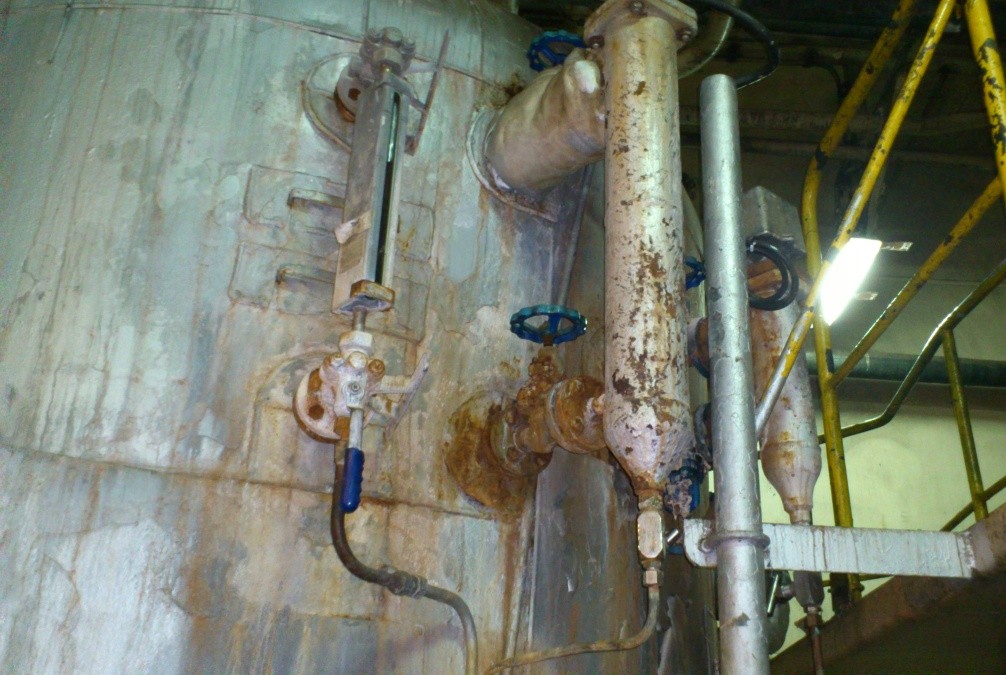
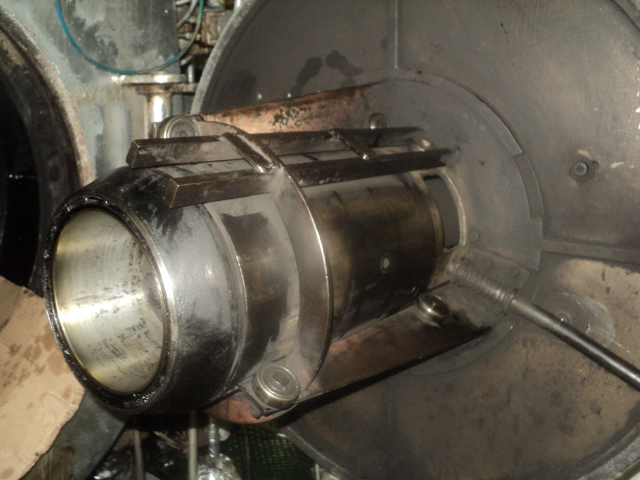
Combustion System
The combustion system generates the heat required to produce steam.
Its performance depends on:
- Fuel condition (temperature and viscosity)
- Proper atomization
- Correct air-fuel ratio
- Stable flame detection
In real operation, combustion must continuously adapt to system demand.
Even when no immediate fault is observed, poor combustion gradually reduces efficiency and affects overall system stability.
Steam Demand
Steam demand onboard is not constant. It varies depending on:
- Cargo operations
- Fuel heating requirements
- Domestic consumption
- Vessel operating condition
The boiler must continuously adjust its output to match this demand.
If production and consumption are not balanced, the system may experience:
- Pressure fluctuations
- Unstable burner operation
- Reduced efficiency
From an operational perspective, anticipating demand changes is more effective than reacting to them.
Condensate Return and System Efficiency
Condensate return improves system efficiency by reducing the need for make-up water and maintaining thermal balance.
However, its condition must always be considered.
Contaminated or unstable condensate can affect the entire system, even when other parameters appear normal.
System Balance and Operational Awareness
Stable boiler operation is achieved by maintaining balance across the entire system.
From a practical point of view, this means:
- Matching feed water supply to steam production
- Maintaining stable combustion
- Adapting to changes in demand
- Observing system behavior as a whole
Key operational insight:
Boiler performance is not defined by how well each component works individually, but by how well the system remains balanced under changing conditions.
Understanding the boiler as an integrated system is essential before analyzing specific factors such as:
- Water quality
- Steam contamination
- Combustion performance
- System efficiency
The following sections focus on these key operational aspects and how they influence boiler behavior under real onboard conditions.
Water Quality and Basic Control
Water quality is one of the most critical aspects of marine auxiliary boiler operation.
From an engine room perspective, water is not just a working fluid — it directly affects heat transfer, internal surfaces and overall system reliability.
Poor water condition does not usually cause immediate failure. Instead, it gradually degrades performance and increases the risk of operational problems over time.
Key Water Parameters
Engineers must continuously monitor boiler water condition using basic indicators such as:
- Conductivity (TDS)
- pH
- Chemical condition
- General water appearance
These parameters provide a practical indication of the internal condition of the boiler and the effectiveness of water treatment.
Rather than focusing on isolated values, it is more important to observe trends over time.
Impact of Poor Water Quality
If water quality is not properly controlled, several problems may develop progressively:
- Scale formation on heat transfer surfaces
- Corrosion of internal components
- Reduced heat transfer efficiency
- Increased risk of steam contamination (carryover)
These effects reduce overall system performance and may lead to long-term damage if not properly managed.
Basic Control Approach
Maintaining acceptable water conditions requires a consistent and controlled approach.
From a practical point of view, this includes:
- Regular monitoring of key parameters
- Maintaining stable operating conditions
- Ensuring proper functioning of the feed water system
- Observing changes in system behavior
At this level, the objective is not precise chemical control, but maintaining stable and predictable conditions.
Role of Blowdown
Blowdown is one of the primary operational tools used to control boiler water quality.
Its function is to:
- Remove dissolved solids from the system
- Maintain acceptable conductivity levels
- Prevent accumulation of contaminants
However, blowdown must be applied in a controlled manner.
Excessive or insufficient blowdown can both negatively affect system stability and efficiency.
Key operational insight:
Water quality issues rarely appear as sudden failures. They develop gradually and are often linked to inconsistent control rather than a single cause.
One of the most direct consequences of poor water quality is steam contamination, commonly known as carryover.
The following section explains how this phenomenon develops and how it affects the steam system in real operation.
Steam Contamination (Carryover)
Carryover in a marine auxiliary boiler occurs when water is carried into the steam system instead of remaining inside the boiler.
Under normal conditions, the boiler should deliver dry steam. When carryover occurs, this separation is no longer effective, and water droplets are transported along with the steam.
From an operational perspective, carryover is not only a boiler issue — it becomes a system-wide problem affecting steam distribution and end users.
How Carryover Develops in Practice
In real operation, carryover often develops gradually.
As dissolved solids increase, the water surface inside the boiler becomes more unstable and prone to foaming.
When steam demand changes or water level fluctuates, this unstable surface allows water to be carried into the steam line.
This explains why carryover is often linked to both water quality and overall system behavior.
Common Symptoms Onboard
Carryover is typically identified through its effects on the steam system rather than direct measurement.
Typical onboard indications include:
- Water hammer in steam lines
- Steam trap malfunction
- Fluctuating steam pressure
- Reduced efficiency in steam consumers
- Presence of moisture in steam lines
These symptoms may develop gradually and are often misinterpreted as unrelated system issues.
Operational Impact
The impact of carryover extends beyond the boiler itself.
It affects:
- Steam distribution systems
- Valves and control equipment
- Heat exchangers and coils
- Overall thermal efficiency
In severe cases, it may lead to mechanical stress in piping systems due to water hammer.
Key operational insight:
Carryover is not caused by a single parameter. It is usually the result of an imbalance between water condition, steam demand and internal boiler stability.
In addition to water quality, combustion performance also plays a key role in overall boiler efficiency and system stability.
The next section focuses on how combustion behavior affects boiler operation under real onboard conditions.
Combustion and Burner Operation
A stable combustion process is essential for efficient and reliable marine auxiliary boiler operation.
In real operation, combustion is not only about producing heat — it directly affects efficiency, system stability and the condition of internal components.
Even when the boiler appears to be operating normally, poor combustion can gradually reduce performance and increase operational risk.
Key Factors Influencing Combustion
Efficient combustion depends on maintaining proper balance between several key elements:
- Correct fuel condition (temperature and viscosity)
- Proper atomization of the fuel
- Adequate and stable air supply
- Reliable flame detection
These factors must remain stable during operation, especially under changing load conditions.
In practical terms, poor combustion not only reduces efficiency but may also increase smoke formation and exhaust emissions.
“In marine operations, combustion quality is directly related to environmental compliance requirements, particularly those defined under MARPOL Annex VI.”
Combustion Behavior in Real Operation
In real onboard conditions, combustion is not static. It continuously adapts to:
- Variations in steam demand
- Changes in firing rate
- Fuel quality and condition
- Air system performance
For this reason, stable combustion depends on the system’s ability to respond smoothly to operational changes.
Irregular combustion behavior is often an early indication of system imbalance.
Effects of Poor Combustion
When combustion is not properly controlled, the effects are not always immediate, but they will gradually impact system performance.
Typical consequences include:
- Increased soot formation on heat transfer surfaces
- Reduced thermal efficiency
- Higher fuel consumption
- Unstable burner operation
- Increased maintenance requirements
Over time, poor combustion also leads to fouling in economizers and reduced heat recovery efficiency.
Operational Considerations
From a practical point of view, combustion should always be observed as part of the overall boiler system.
It must remain aligned with:
- Steam demand
- Water level stability
- Heat transfer conditions
A well-adjusted combustion system contributes to smooth operation and predictable system behavior.
Key operational insight:
Stable combustion is not defined by flame presence alone, but by consistent and controlled performance under varying operating conditions.
Combustion performance is closely related to the condition of heat recovery systems, particularly the economizer.
The following section provides an overview of economizer operation and its role in overall boiler efficiency.
Economizer Operation (General Overview)
The economizer plays a key role in improving overall boiler efficiency by recovering heat from main engine exhaust gases to generate steam.
In real operation, it is one of the most effective ways to reduce fuel consumption, as it utilizes energy that would otherwise be lost.
However, its performance is directly influenced by operating conditions and system behavior.
Key Factors Affecting Economizer Performance
The effectiveness of the economizer depends mainly on:
- Main engine load
- Condition of heat transfer surfaces
- Stability of combustion
When the engine operates at higher and stable loads, exhaust gas temperature and flow are sufficient to support consistent steam generation.
At lower loads, steam production decreases and overall system efficiency is reduced.
Heat Transfer and Fouling
Efficient heat transfer is essential for proper economizer performance.
Over time, soot and unburned particles accumulate on heat transfer surfaces, creating an insulating layer that reduces efficiency.
As fouling increases:
- Steam production gradually decreases
- Exhaust gas temperature may rise
- Overall system efficiency is reduced
This process is progressive and often goes unnoticed if performance trends are not properly monitored.
Operational Awareness
In practical terms, the economizer should not be treated as a passive component.
Its performance must be continuously observed through:
- Exhaust gas temperature trends
- Steam generation behavior
- Changes in system response over time
Understanding these indicators helps identify early signs of performance degradation.
Practical Implications
The performance of the economizer directly affects the overall steam system.
Reduced heat recovery efficiency may result in:
- Increased load on auxiliary boilers
- Higher fuel consumption
- Reduced system flexibility
For this reason, maintaining proper operating conditions is essential to ensure consistent performance.
Key operational insight:
The economizer does not fail suddenly — its performance degrades progressively, and early signs are usually visible through changes in system behavior.
In addition to system components, boiler operation depends on maintaining key parameters within stable limits.
The following section outlines the main operational parameters that engineers must monitor in real onboard conditions.
Key Operational Parameters
Stable operation of a marine auxiliary boiler depends on maintaining key parameters within controlled and predictable limits.
From an engine room perspective, these parameters provide direct insight into system condition and overall performance.
Rather than focusing on individual readings, engineers should observe trends and relationships between variables.
Water Level
Water level is one of the most critical parameters in boiler operation.
It must remain stable within defined limits to ensure proper heat transfer and safe operation.
Unstable or fluctuating levels may indicate an imbalance between feed water supply and steam generation.
Steam Pressure
Steam pressure reflects the balance between steam production and demand.
A stable pressure indicates that the system is operating in equilibrium.
Fluctuations may indicate changes in demand, combustion instability or overall system imbalance.
Water Condition
Water condition directly affects internal boiler surfaces and overall system reliability.
Changes in conductivity, pH or general appearance may indicate a loss of control over water quality.
These variations should be observed as part of overall system behavior rather than as isolated values.
Exhaust Gas Temperature
Exhaust gas temperature is a key indicator of combustion efficiency and heat recovery performance.
Changes in temperature may reflect:
- Combustion condition
- Fouling of heat transfer surfaces
- Variations in engine load
Monitoring temperature trends helps identify gradual performance degradation.
Key operational insight:
Stable parameters do not guarantee correct operation, but unstable trends are always an indication of system imbalance.
In practice, the relationship between these parameters provides more information than any single value.
Understanding how they interact is essential for maintaining consistent boiler performance under varying operating conditions.
Typical Boiler Issues (General Overview)
In real engine room operation, marine auxiliary boiler problems rarely appear as isolated failures.
They are usually the result of small deviations that develop over time and begin to affect system stability.
Understanding these issues at a general level is essential to improve operational awareness and support better decision-making.
Flame Instability
Flame instability is one of the most common operational issues in marine boilers.
It is often linked to an imbalance in the combustion process and may be influenced by:
- Fuel condition
- Variations in air supply
- Burner performance
Although it may initially appear as a minor fluctuation, persistent instability can affect overall system efficiency and reliability.
Pressure Fluctuations
Steam pressure fluctuations usually indicate an imbalance between steam production and demand.
This may be associated with:
- Variations in load
- Irregular combustion behavior
- Changes in system conditions
In practice, pressure instability is often a symptom rather than the root cause of the problem.
Reduced Steam Production
A gradual reduction in steam output is typically linked to a loss of efficiency within the system.
Possible contributing factors include:
- Fouling of heat transfer surfaces
- Reduced combustion efficiency
- Changes in operating conditions
This issue is often progressive and may go unnoticed if system performance is not regularly monitored.
Water Quality Deviations
Deviations in water quality can affect both boiler performance and overall system reliability.
These may be related to:
- Inadequate blowdown control
- Contamination
- Variations in treatment effectiveness
Water quality issues are often interconnected with other operational problems and should be considered as part of the overall system condition.
Key operational insight:
Most boiler issues are not independent failures, but interconnected effects of system imbalance.
In practice, identifying patterns and relationships between symptoms is more valuable than focusing on individual events.
A general understanding of these issues provides the foundation for deeper analysis and more effective response in real operational situations.
From Tankers to FPSO – Understanding the Next Level
In commercial vessels, steam is mainly used as a service utility.
It supports cargo operations, fuel handling and basic onboard systems. Although it is critical, it is generally not directly integrated into the vessel’s core operational process.
In FPSO units, this concept changes completely.
Steam systems become an integral part of the production process.
Steam may be used for:
- Process heating
- System integration
- Energy support for production systems
This represents a fundamental transition:
Service system → Process-integrated system
In this environment, steam is no longer only supporting operations — it becomes directly linked to production efficiency, system performance and overall energy balance.
As a result, boiler operation requires:
- A higher level of control
- Greater operational discipline
- A deeper understanding of system interactions
- Increased awareness of safety implications
For engineers moving from tankers to offshore, this represents a key step in understanding more complex systems and preparing for higher levels of technical responsibility.
In the offshore industry, steam systems are not limited to FPSO units.
Other offshore installations such as FSOs and production platforms also utilize steam, mainly for heating and utility purposes. However, the level of integration and operational complexity is generally lower compared to FPSO units.
This reinforces the importance of understanding steam systems not only as a utility, but as a process-integrated system in more advanced offshore operations.
Conclusion
Marine boiler operation requires more than routine monitoring — it demands continuous operational awareness across the entire marine auxiliary boiler system.
A well-managed boiler system depends on:
- Stable operation
- Proper water condition
- Efficient combustion
- Continuous observation of system trends
In practice, the difference between normal operation and operational problems is often defined by how early deviations are identified and understood.
Engineers who develop this level of awareness are better prepared to:
- Maintain safe and efficient operation
- Prevent progressive system degradation
- Adapt to changing operating conditions
- Transition into more advanced offshore systems
Next Step for Engineers
This article provides a structured understanding of how marine boiler auxiliary systems operate under real onboard conditions.
However, effective operation requires more than understanding — it requires the ability to respond correctly when problems occur.
A more detailed technical approach may include:
- Real failure scenarios
- Step-by-step troubleshooting logic
- Practical onboard checklists
- Decision-making under real operating conditions
These aspects represent the next level of operational understanding for engineers working with marine auxiliary boiler systems.
“You can also read our detailed guide on Oily Water Separator (OWS) operation and MARPOL compliance.”
Pingback: FPSO Vacuum Condenser: Operation & Common Problems | OCEUM