The Oily Water Separator (OWS) is a critical piece of equipment on board modern merchant vessels, ensuring that oily bilge water generated in the engine room is treated in compliance with international environmental regulations. Inside the engine room, where daily operations involve fuel handling, machinery drainage and cleaning activities, the generation of oily bilge water is unavoidable.
To ensure that this contaminated water is treated before any discharge overboard, one piece of equipment plays a key role in environmental compliance: the OWS system. More than a regulatory requirement, the correct operation of the OWS reflects the professionalism of the engine room team and directly affects the vessel’s operational reputation.
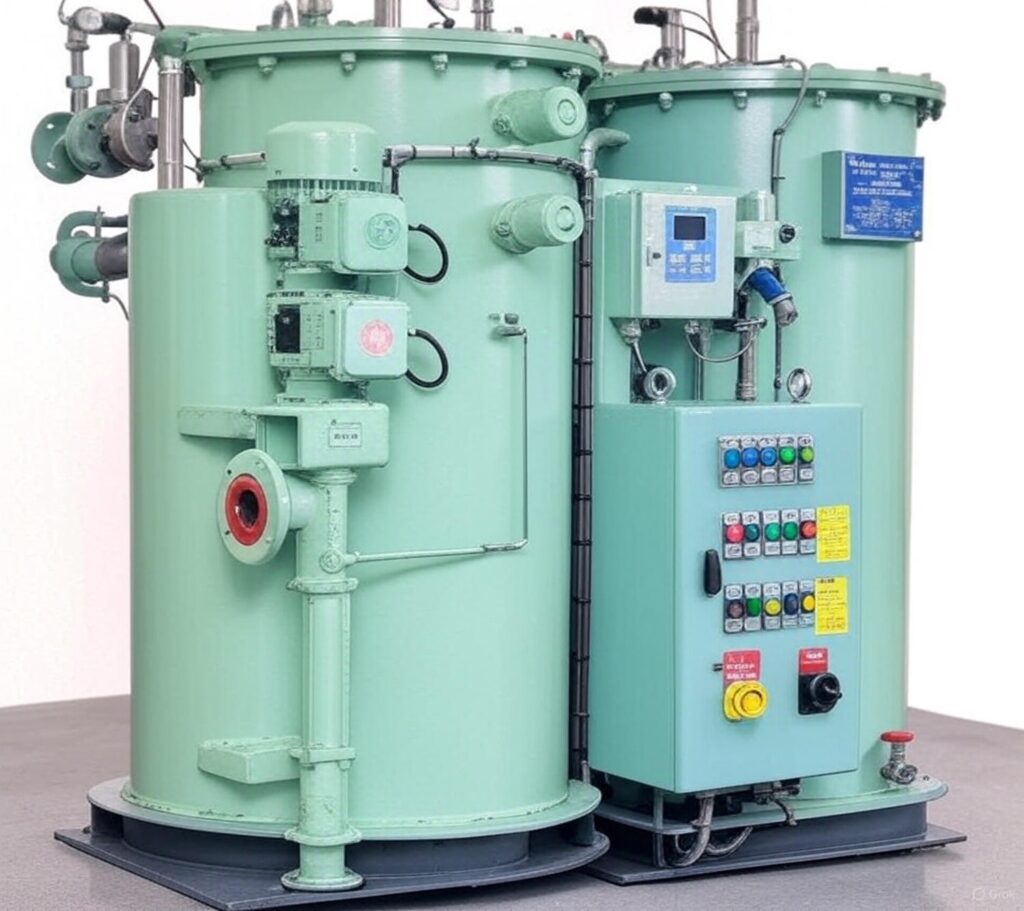
Imagen adapted from manufacturer reference, used for educational and illustrative purposes only.
What is an Oily Water Separator (OWS)?
The Oily Water Separator (OWS) is a pollution prevention system designed to separate oil from bilge water generated in the engine room. Its purpose is to reduce the oil content of discharged water to levels acceptable under international regulations, specifically below 15 parts per million (ppm), as required by MARPOL Annex I.
Why the OWS is Essential for Environmental Compliance
Improper operation or misuse of the OWS can lead to severe consequences, including vessel detention, heavy fines, criminal liability and reputational damage. For this reason, OWS operation is closely monitored during Port State Control (PSC) inspections and vetting programs such as SIRE 2.0.
Typical Sources of Oily Bilge Water in the Engine Room
Oily bilge water originates from multiple routine sources, including machinery leakages, drainage from fuel and lube oil systems, tank cleaning residues and engine room wash-down operations. This mixture must never be discharged directly overboard without treatment.
OWS Operating Principle: Three-Stage Separation Process
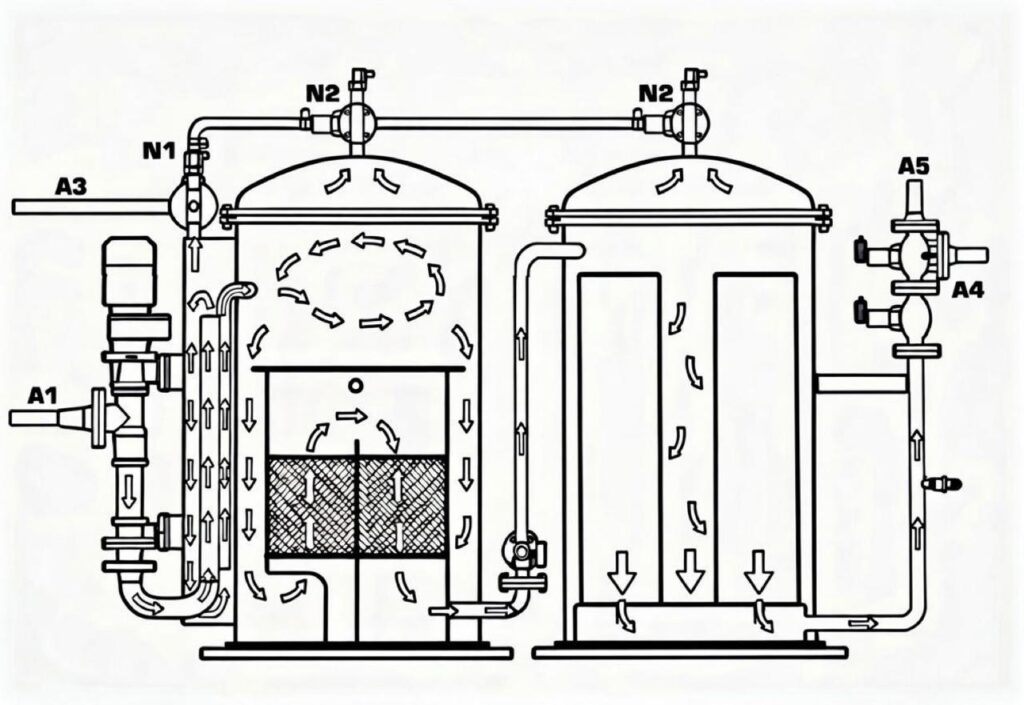
Imagen adapted from manufacturer reference, used for educational and illustrative purposes only.
Most modern OWS systems operate using a multi-stage separation principle to progressively remove oil from water.
Stage 1: Initial Separation
Oily bilge water is pumped from the bilge well or collection tank into the first separation chamber. Due to density differences, free oil rises to the surface and is automatically directed to the waste oil tank. This process may be assisted by hydrocyclones or centrifugal forces.
Stage 2: Coalescence and Gravity Separation
In the second stage, micro oil droplets are forced to combine (coalescence) into larger droplets, which then rise by gravity. Solid particles settle at the bottom and can be periodically drained. In offshore operations, detergents, drilling residues, and high turbulence can increase emulsion stability, making Stage 2 performance and maintenance particularly critical.
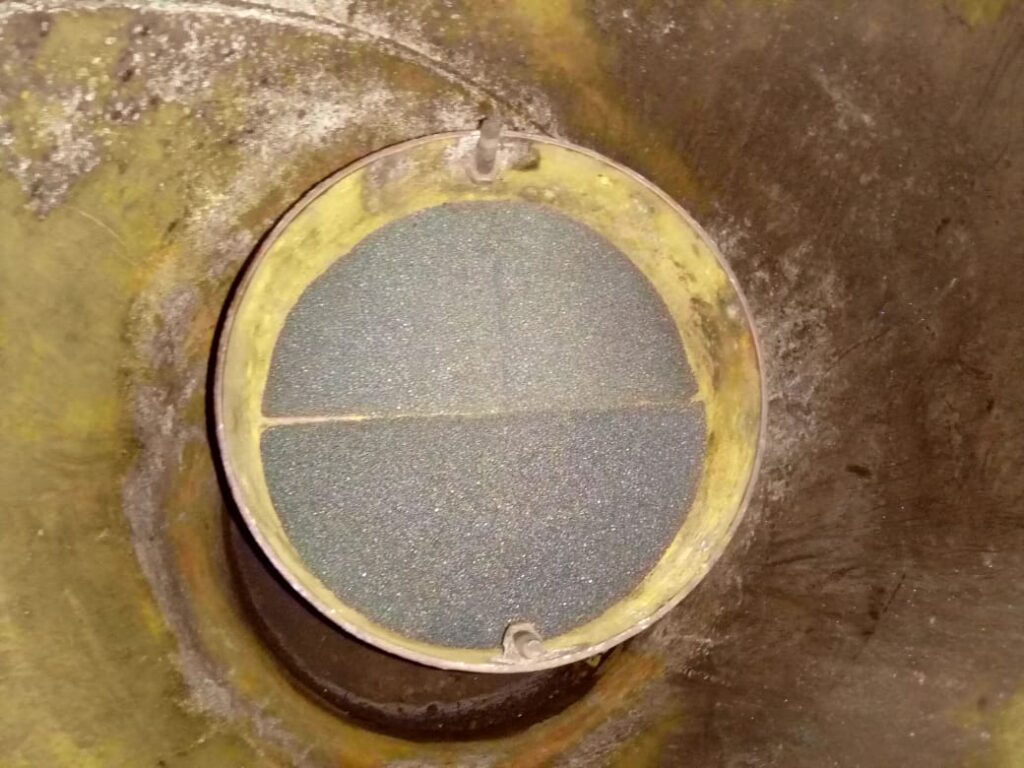
Stage 3: Final Separation and Oil Content Monitoring
The final stage is responsible for refined processing of the remaining oil content and ensures compliance with the 15 ppm discharge limit.
The treated water is continuously monitored by an oil content monitor (OCM). If the oil concentration exceeds the limit, an automatic three-way valve redirects the flow back to the retention tank.
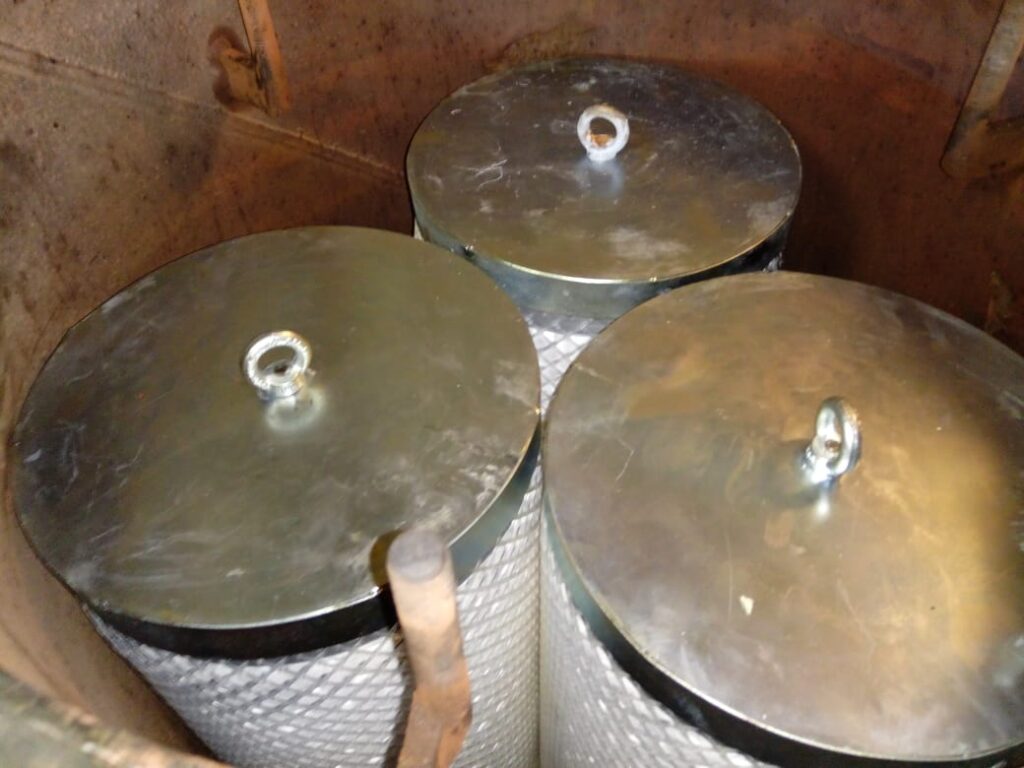
Any bypass, manual intervention or alarm override at this stage represents a serious compliance risk and must be strictly avoided during normal operation.
15 ppm Oil Content Monitor and Automatic Discharge Control
The oil content monitor continuously measures the oil concentration and activates alarms and discharge control valves when limits are exceeded. Data logging and self-cleaning functions are commonly integrated, providing traceability for inspections.
The performance criteria, alarm settings and automatic discharge arrangements of 15 ppm oil content monitors are defined in MEPC.107(49), issued by the International Maritime Organization (IMO).

Other Common OWS Designs Used on Board
Some OWS designs integrate all separation stages into a single vertical chamber, combining centrifugal separation, coalescing elements and final separation elements. These compact systems are commonly installed on vessels with limited engine room space.
MARPOL Annex I: Legal Conditions for OWS Operation
The vessel is en route and proceeding at sea, outside restricted or special areas.
The discharge occurs outside special areas
Oil content does not exceed 15 ppm
The system operates automatically
All operations are recorded in the Oil Record Book
The system is type-approved by a recognized classification society
Good Operational Practices for OWS Reliability
Regular system flushing with clean water, proper calibration of the oil content monitor, routine inspection of coalescing elements and thorough crew training are essential to ensure reliable OWS performance.
Common Failures, Causes and Corrective Actions
Typical issues include false high ppm readings due to sensor contamination, malfunctioning three-way valves and improper bilge management practices. Most failures are linked to poor maintenance or human error rather than equipment defects.
What is the maximum oil content allowed for overboard discharge using an Oily Water Separator?
Under MARPOL Annex I, bilge water treated by an Oily Water Separator may only be discharged overboard if the oil content does not exceed 15 parts per million (ppm). The system must operate automatically and be monitored by an approved 15 ppm oil content monitor.
What happens if the Oily Water Separator exceeds the 15 ppm limit during operation?
If the oil content exceeds 15 ppm, the oil content monitor automatically activates an alarm and diverts the discharge back to the bilge or retention tank through a three-way valve. Overboard discharge is immediately stopped to ensure compliance with MARPOL Annex I requirements.
Final Remarks from an Engine Room and Chief Engineer Perspective
The Oily Water Separator is not merely an auxiliary system, but a critical environmental protection device. Proper operation, maintenance and crew awareness are essential to avoid legal consequences and to ensure responsible ship operation.
This article is part of OCEUM’s broader technical approach to maritime engineering, where operational experience, regulatory compliance, and system-level understanding are addressed across multiple shipboard and shore-based scenarios.
Related technical resources, onboard procedures and practical engineering support are outlined in our Maritime Engineering Services section.