
Ship machinery systems are the backbone of safe, efficient, and reliable vessel operations. Every voyage, cargo operation, and port stay depends on the correct interaction between propulsion, auxiliary machinery, and the supporting systems that keep everything running under real operating conditions.
This guide is written from a practical engineering point of view, based on real experience on board commercial vessels. It does not focus on textbook theory or manufacturer manuals, but on how machinery systems are actually operated, maintained, and managed at sea.
In the engine room, nothing works in isolation. Main engines, auxiliary engines, fuel oil, lubrication, cooling, electrical power generation, and automation are all connected. A small issue in one system can quickly turn into delays, off-hire, safety risks, or compliance problems if it is not understood and controlled in time.
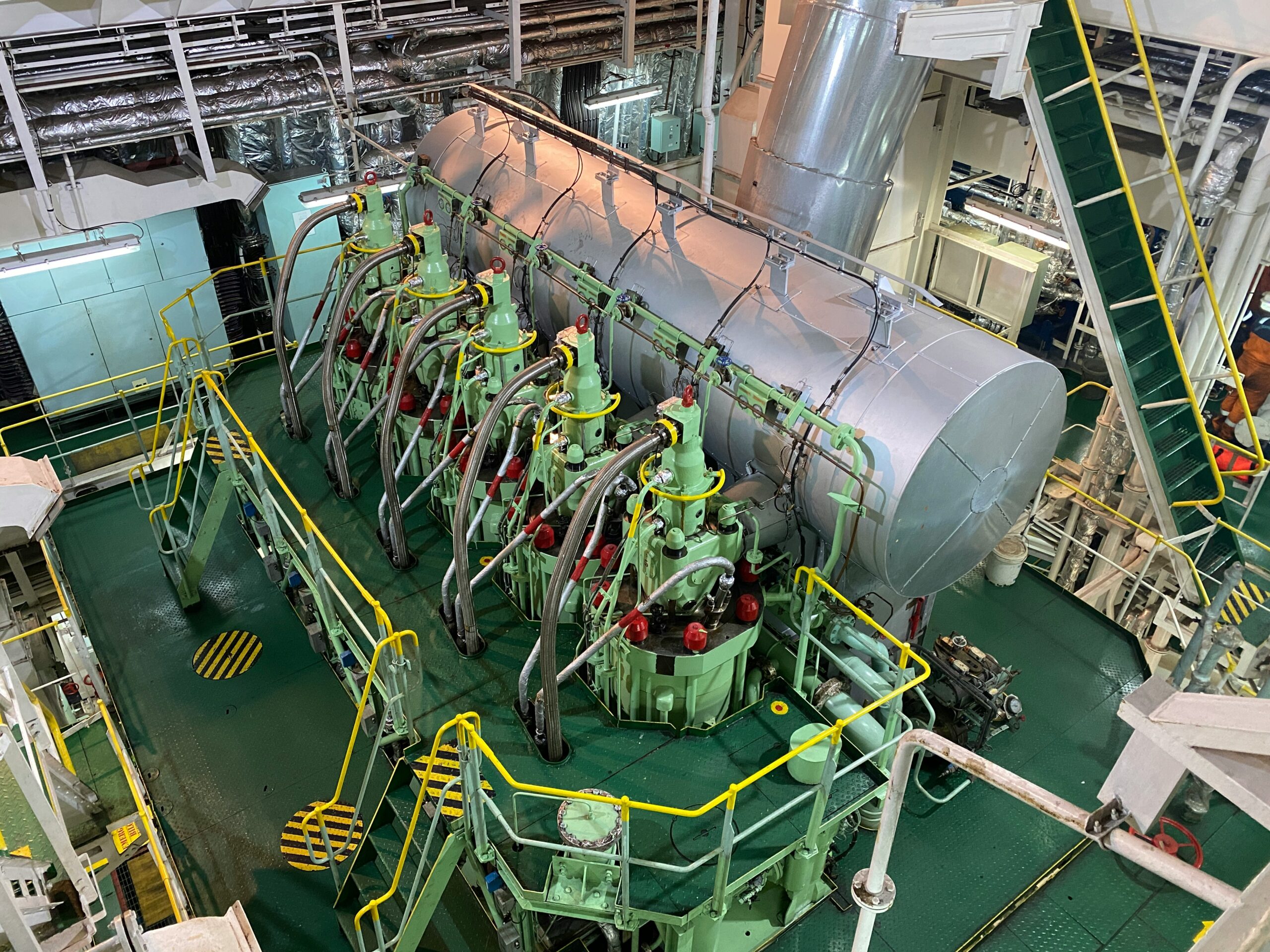
This article provides a clear and structured view of ship machinery systems, focusing on real operational challenges, maintenance practices, common failure patterns, and the day-to-day decisions engine room personnel must make on board commercial vessels.
It is written for marine engineers, technical officers, and anyone involved in ship operations who wants a realistic, experience-based understanding of machinery on board, and it serves as a starting point for deeper guides and real cases in the OCEUM technical series.
Role of Ship Machinery Systems in Vessel Operations
Ship machinery systems play a decisive role in the safe, efficient, and continuous operation of commercial vessels. Beyond propulsion, these systems directly support navigation, cargo handling, onboard safety functions, and compliance with international regulations.
From a practical engine room perspective, machinery systems are not isolated units. Propulsion plants, auxiliary machinery, fuel systems, electrical power generation, automation, and safety systems operate as an integrated network. The performance or failure of one system has immediate consequences on the vessel’s overall operational capability.
During normal sea passage, machinery systems ensure speed control, maneuverability, redundancy, and operational reliability. In port, they support cargo operations, ballast management, peak electrical loads, and critical safety systems. Any weakness in machinery readiness can result in delays, off-hire situations, or increased exposure during inspections and audits.
For engine room personnel, understanding the operational role of machinery systems goes beyond knowing individual pieces of equipment. It requires a system-based approach, where interactions between systems, load conditions, redundancy philosophy, and operational limits are clearly understood.
This is especially critical on tankers and other specialized vessels, where machinery performance is directly linked to cargo safety, environmental protection, and regulatory compliance. Small deviations in operation or maintenance can have significant operational and commercial consequences.
In real operations, many incidents do not originate from major failures, but from degraded performance, incorrect operation, or lack of situational awareness between interconnected systems. Effective machinery management therefore relies on continuous monitoring, preventive maintenance, proper operating procedures, and sound engineering judgment by the engine department.
Main Propulsion Systems on Commercial Vessels
Main propulsion systems are the primary element of vessel mobility and operational capability. Their performance directly affects voyage planning, fuel consumption, schedule reliability and, most importantly, safety at sea. On board commercial vessels, propulsion systems are designed to operate continuously under varying loads and sea conditions, which places high demands on both machinery design and operational management.
From an operational engineering perspective, the main engine is not an isolated unit. Its reliability depends on the correct interaction between combustion processes, lubrication systems, cooling systems, fuel treatment, control systems and the propeller arrangement. Any imbalance or degradation in one of these supporting elements can quickly translate into reduced efficiency, increased wear or unplanned downtime.
In daily operations, propulsion-related issues rarely arise from sudden catastrophic failures. More commonly, they develop progressively through factors such as improper load management, inadequate maintenance planning, poor fuel quality control or deviations from recommended operating parameters. Early recognition of abnormal trends—such as increases or deviations in exhaust temperatures, fuel index deviations, abnormal lube oil consumption, or unusual vibration patterns—is a critical responsibility of the engine room team.
Effective management of main propulsion systems requires a combination of technical knowledge, operational discipline and situational awareness. Chief Engineers must balance engine load, fuel efficiency and machinery protection while adapting to commercial pressures, weather conditions and voyage requirements. Sound decision-making in propulsion management is essential to safe, economical and reliable vessel operations.
Auxiliary Machinery Systems in Ship Engine Rooms
Auxiliary machinery systems provide the essential support functions that allow the main propulsion plant and the vessel as a whole to operate safely, efficiently, and continuously. Although they often receive less attention than the main engine, auxiliary systems are frequently the source of operational limitations, delays, and incidents when they are not properly managed.
These systems include, among others, cooling water systems, lubrication oil systems, compressed air systems, boilers, freshwater generation, bilge and ballast systems, steering gear hydraulics, and cargo-related auxiliary equipment. Each of these systems plays a critical role in maintaining machinery availability and overall ship readiness.
From an operational point of view, auxiliary machinery systems are highly interdependent. A failure in a cooling pump, air compressor, or fuel transfer system can quickly escalate into propulsion limitations, partial or total blackout situations, or even loss of maneuverability. For this reason, auxiliary systems must be treated as mission-critical equipment, not as secondary machinery.
In practice, auxiliary machinery failures are often linked to inadequate preventive maintenance, poor housekeeping, contamination issues, or non-compliance with standard operating procedures. Blocked heat exchangers, leaking valves, degraded seals, moisture in air systems, and incorrect system line-ups are common situations encountered during daily operations and port stays.
Effective management of auxiliary machinery systems relies on structured maintenance planning, clear operational procedures and continuous monitoring. Chief Engineers must ensure redundancy is preserved, standby equipment is functional and crew members clearly understand system line-ups and operational limitations. A well-maintained auxiliary plant is a key factor in reducing operational risk and maintaining compliance with class, flag state and charterer requirements.
Supporting Systems: Fuel, Lubrication, Cooling and Air
Fuel, lubrication, cooling and air systems form the core supporting infrastructure of ship machinery. Their correct operation directly affects engine performance, reliability, emissions compliance (MARPOL Annex VI), and overall operational safety. Failures in these systems rarely remain isolated and often escalate into machinery damage, safety incidents or off-hire situations.
Fuel oil systems are particularly critical due to the complexity of modern fuel treatment requirements. Heating, viscosity control, purification, filtration and correct system line-up must be continuously monitored. Contaminated fuel, improper separator operation, poor tank management or incorrect change-over procedures can result in injector damage, fuel pump failures, loss of power and non-compliance with environmental regulations.
Lubrication systems are responsible for protecting machinery against wear, friction and thermal stress. Inadequate lubrication oil quality, incorrect oil selection, contamination by water or fuel and insufficient monitoring of oil condition can rapidly lead to bearing damage, liner scuffing or catastrophic machinery failure. Effective lubrication management requires regular oil analysis, strict housekeeping and adherence to manufacturer and class recommendations.
Cooling systems play a vital role in maintaining correct operating temperatures for engines, auxiliary machinery and electrical equipment. Both seawater and freshwater cooling systems must be carefully managed to prevent corrosion, scaling, fouling and loss of cooling efficiency. Blocked coolers, air pockets, leaking valves or degraded pumps are common operational issues that can escalate into alarms, load reductions or machinery shutdowns.
Compressed air systems are essential for safe ship operation, particularly for main engine starting, control air for automation systems and general service air. Air compressor reliability, dryer performance, air receiver condition and correct pressure management are critical. Failures in air systems can lead to starting failures, loss of control functions and serious safety risks, especially during maneuvering or emergency situations.
From an operational perspective, supporting systems demand continuous attention and proactive management. Chief Engineers must ensure that system parameters are clearly understood by the engine room team, alarms are correctly set and properly responded to, and maintenance activities are aligned with actual operating conditions. Proper management of fuel, lubrication, cooling and air systems is one of the most effective ways to extend machinery life, reduce failures and maintain compliance with class, flag state and charterer requirements.
Electrical Power Generation and Automation on Board Ships
Electrical power generation and automation systems are critical to the safe and continuous operation of modern commercial vessels. From propulsion support to navigation equipment, cargo systems, safety devices and accommodation services, almost every onboard function depends on a stable and reliable electrical supply.
The power generation plant, typically composed of auxiliary generators and an emergency generator, must be operated with a clear understanding of load demand, redundancy requirements and system limitations. Poor load management, incorrect generator synchronization or delayed response to load changes can quickly lead to blackouts, equipment damage and loss of critical ship functions.
Automation systems play a central role in monitoring machinery condition, managing alarms and enabling unmanned or periodically unmanned engine room operations. However, automation does not replace engineering judgment. Over-reliance on automated systems without proper understanding of logic, interlocks and alarm priorities can create a false sense of security and delay corrective actions during abnormal situations.
Effective alarm management is essential. Alarm flooding, poorly set limits or ignored warnings are common contributing factors in machinery incidents. Chief Engineers must ensure that alarm systems are correctly configured, regularly tested and fully understood by the engine room team. Alarms should support decision-making, not overwhelm it.
Power management systems (PMS) require particular attention, especially during critical operations such as maneuvering, cargo operations and port stays. Proper testing of blackout recovery, emergency generator start-up, load shedding functions and automatic changeover sequences is essential to ensure system readiness under real operating conditions.
From an operational perspective, electrical power generation and automation systems demand continuous training, regular drills and disciplined maintenance. A well-managed electrical plant enhances vessel reliability, reduces operational risk and ensures compliance with class, flag state and charterer requirements.
Maintenance Philosophy for Commercial Vessel Machinery
Maintenance on board commercial vessels goes far beyond simply following a planned maintenance system (PMS). While schedules, running hours and manufacturer recommendations provide a necessary framework, effective maintenance is ultimately driven by operational judgment, experience and risk assessment.
In real operations, machinery condition does not always align with planned intervals. Equipment may require early intervention due to abnormal operating conditions, degraded performance or changes in operational profile. Conversely, certain tasks may be safely deferred when supported by condition monitoring, inspections and engineering evaluation. This balance between planned maintenance and condition-based maintenance is a daily responsibility of the Chief Engineer.
A well-implemented maintenance philosophy prioritizes safety-critical equipment, redundancy preservation and system availability.This is especially relevant for pollution prevention equipment such as oily water separators, where improper operation or poor maintenance can result in regulatory non-compliance and serious operational consequences. Main propulsion, electrical power generation, steering gear, fire-fighting systems and pollution prevention equipment must always remain at the highest level of readiness. Maintenance decisions must consider not only technical condition, but also voyage planning, port schedules, spare part availability and crew workload.
Documentation plays a key role in modern ship management. Maintenance records, defect reports, risk assessments and temporary repairs must be clearly documented and traceable. During audits and inspections, the quality of records often reflects the quality of maintenance management. Inspectors are not only looking for completed tasks, but for evidence of informed decision-making and control of known deficiencies.
From a Chief Engineer’s perspective, maintenance is a continuous process of observation, analysis and adaptation. Crew training, toolbox talks and knowledge transfer are essential to ensure that maintenance standards are consistently applied. A strong maintenance culture reduces failures, minimizes downtime and supports compliance with class, flag state, ISM and charterer requirements, including SIRE 2.0 expectations.
Common Failures and Operational Risks
Most machinery-related incidents on board commercial vessels do not originate from sudden catastrophic failures. Instead, they develop progressively from degraded performance, overlooked alarms, incorrect operational practices or loss of situational awareness between interconnected systems.
Common failures often begin as minor deviations: rising temperatures, unstable pressures, abnormal vibrations, repeated alarms or temporary bypasses left in service longer than intended. When these warning signs are normalized or not properly investigated, small issues can escalate into propulsion loss, blackout, cargo delays or environmental incidents.
Operational risk increases significantly when redundancy is compromised. Running with unavailable standby equipment, deferred maintenance on critical systems or insufficient spare parts reduces the vessel’s ability to respond to abnormal situations. In many cases, incidents occur not because a system failed, but because no effective backup was available when it was needed.
Human factors play a central role in machinery failures. Fatigue, time pressure, poor communication between deck and engine departments and lack of clear operational procedures contribute directly to incidents. Incorrect valve line-ups, incomplete changeover procedures and misunderstandings during maneuvering or cargo operations remain frequent contributors to machinery-related events.
From an inspection and compliance perspective, these operational risks are closely scrutinized. Under SIRE 2.0, inspectors place strong emphasis on risk awareness, system knowledge and decision-making processes rather than checklist compliance alone. Temporary repairs, alarms inhibited for operational convenience and repeated defects without root cause analysis are considered indicators of weak technical management.
Effective risk control relies on early detection, conservative decision-making and a strong safety culture. Chief Engineers must ensure that machinery conditions are continuously monitored, deficiencies are formally assessed and corrective actions are clearly defined. Understanding how failures develop in real operations is essential to preventing incidents and maintaining safe, reliable vessel performance.
Why an Integrated View of Ship Machinery Systems Matters
On board a commercial vessel, machinery systems function as an interconnected network rather than independent units. Ship machinery systems do not operate in isolation. A change or failure in one system often affects several others, sometimes in unexpected ways. Understanding these interdependencies is essential for effective decision-making and proper risk control.
Many operational incidents do not result from a single major failure, but from a combination of minor deficiencies across different systems. A restriction in a cooling system may lead to increased engine temperatures, affecting lubrication performance, accelerating component wear and increasing fuel consumption. Similarly, electrical instability can compromise automation, alarms and safety systems, reducing the crew’s ability to respond in time.
An integrated view of machinery systems allows Chief Engineers and technical officers to anticipate risks, understand system interactions and make conservative, well-informed operational decisions. This approach is especially important during critical phases such as maneuvering, cargo operations, port stays and emergency situations.
From a management perspective, integrated system knowledge improves maintenance planning, spare parts strategy and crew training. It also supports compliance with class, flag state and charterer requirements, as well as inspection regimes such as SIRE 2.0, where system awareness, condition monitoring and operational readiness are closely assessed.
Ultimately, vessels operated with an integrated machinery philosophy demonstrate higher reliability, reduced off-hire risk and stronger safety performance. This mindset is a defining characteristic of experienced engineering teams and is fundamental to safe, efficient and compliant ship operations.
Need technical support or operational guidance? Explore our maritime engineering services.